How to Store Natural Foods Properly
Article Insights
Choosing pure, untreated foods is one of the most rewarding commitments you can make for your health, yet unrefined staples require conscious care. Without synthetic preservatives, chemical antimicrobials, or artificial stabilizers, natural ingredients remain living botanicals that react rapidly to atmospheric shifts, ambient heat, and light exposure.
Understanding the Vulnerability of Living Ingredients
Conventional processed groceries survive on market shelves for years because industrial refining strips away fragile germ oils, active enzymes, and natural moisture. Natural foods, by contrast, retain their intact bran layers, essential polyunsaturated fatty acids, and vibrant bioavailable compounds. While this richness delivers exceptional nourishment, it also invites rapid oxidation whenever ingredients sit in warm, unsealed cupboards.
Raw seeds, unrefined nut butters, and ancient grain flakes contain delicate lipids that easily turn bitter upon contact with airborne oxygen. Storing them casually inside torn retail bags allows atmospheric humidity to penetrate, accelerating nutrient degradation and encouraging microscopic spoilage long before an expiration date arrives.
Protecting clean food from warmth, humidity, and direct sunlight keeps the original enzyme matrix and delicate flavor profile completely intact.
— James Miller, Whole Nutrition Specialist
Essential Protocols for Whole Foods and Grains
Establishing a disciplined pantry routine preserves the substantial investment you place into wholesome nutrition. Follow these baseline habits whenever restocking your kitchen:
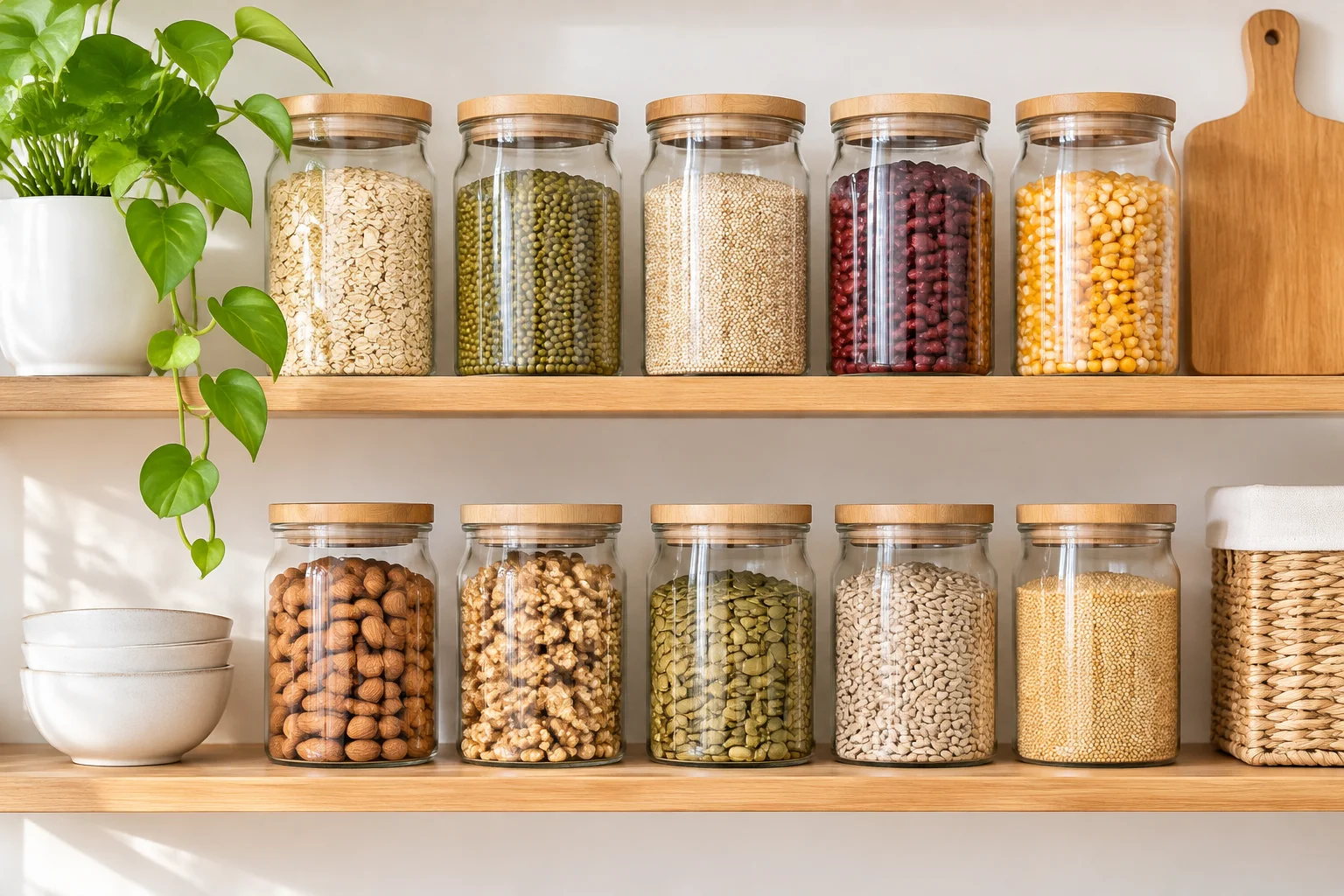
- Airtight Glass Containment: Decant flours, quinoa, and rolled flakes directly into sealed glass canisters to eliminate exposure to humidity and micro-pests.
- Cold Storage for Fragile Lipids: Relocate raw nut spreads, shelled walnuts, flaxseeds, and unrefined virgin oils to the refrigerator or freezer where low temperatures delay lipid breakdown.
- Dark, Low-Humidity Compartments: Designate cool pantry shelves placed well away from stove burners, microwave vents, and south-facing kitchen windows.
Key Takeaways
1. Transfer every bulk purchase into non-porous, airtight glass jars immediately upon unboxing.
2. Maintain baseline storage zones below 68°F (20°C) and keep cold-pressed oils away from hot culinary ranges.
3. Mark purchase dates on jars with removable labels to maintain a strict first-in, first-out kitchen cycle.
Addressing Common Pantry Storage Complications
Temperature fluctuations often create condensation inside sealed containers, especially during seasonal weather shifts. If you notice moisture droplets clinging to glass walls, immediately spread the grain over clean parchment paper to air-dry before resealing in an entirely dry jar. Placing dried bay leaves inside pantry cabinets provides a gentle, traditional deterrent against pantry moths without introducing harmful sprays. By dedicating just a few mindful minutes to proper pantry containment, your natural ingredients will reward you with exceptional flavor, robust texture, and uncompromised vitality.